Boldie #1: Arnie Segarra
A Cup of Coffee with the “Mayor of Greenwich Village”
A Cup of Coffee with the “Mayor of Greenwich Village”
Arnie, how do you know everyone that walks by?
“Let me tell you my secret, be nice to people. Say hi. Smile. Tell your neighbors good morning.”
And that’s exactly how I met Arnie. I was walking down Waverly one summer day a few years back, and he smiled and nodded, “Good morning! Beautiful day isn’t it?” Then we had a conversation. And now he’s a regular presence in my circle and neighborhood coffee routine.
Arnie on aging, reflecting back on his life:
“It’s the fourth quarter. The clock is running… I have no timeouts but then I look up at the scoreboard and I did pretty good! I'm way ahead.”
Advice that he repeats frequently:
             Stay focused.
             Treasure your friendships.
             Never give up.
One of the best things about New York:
In addition to his beloved wife, Aedin…
“There are so many good people in this town, people you never hear about who are working with youth programs, with the elderly, in churches and soup kitchens throughout the boroughs. Their everyday efforts ensure the vitality of the city and the well-being of the people who live here.” (Source - New York Newsday City Profile)
Early Life
Arnaldo Segarra grew up in the Johnson Housing Projects in East Harlem. Born on July 13, 1942 (he likes to say 1992 - ‘The state department messed up my birth certificate!’) both his mother and father immigrated from Puerto Rico in the 1930s.
“They came here for a four-letter word: WORK,” he says.
The way he describes Spanish Harlem in the 60s is quite similar to the neighborhood scenes in American Gangster coming to life. He talks about the Black Panthers, crossing paths with Frank Lucas, playing stick ball in the streets and the tensions in the neighborhood.
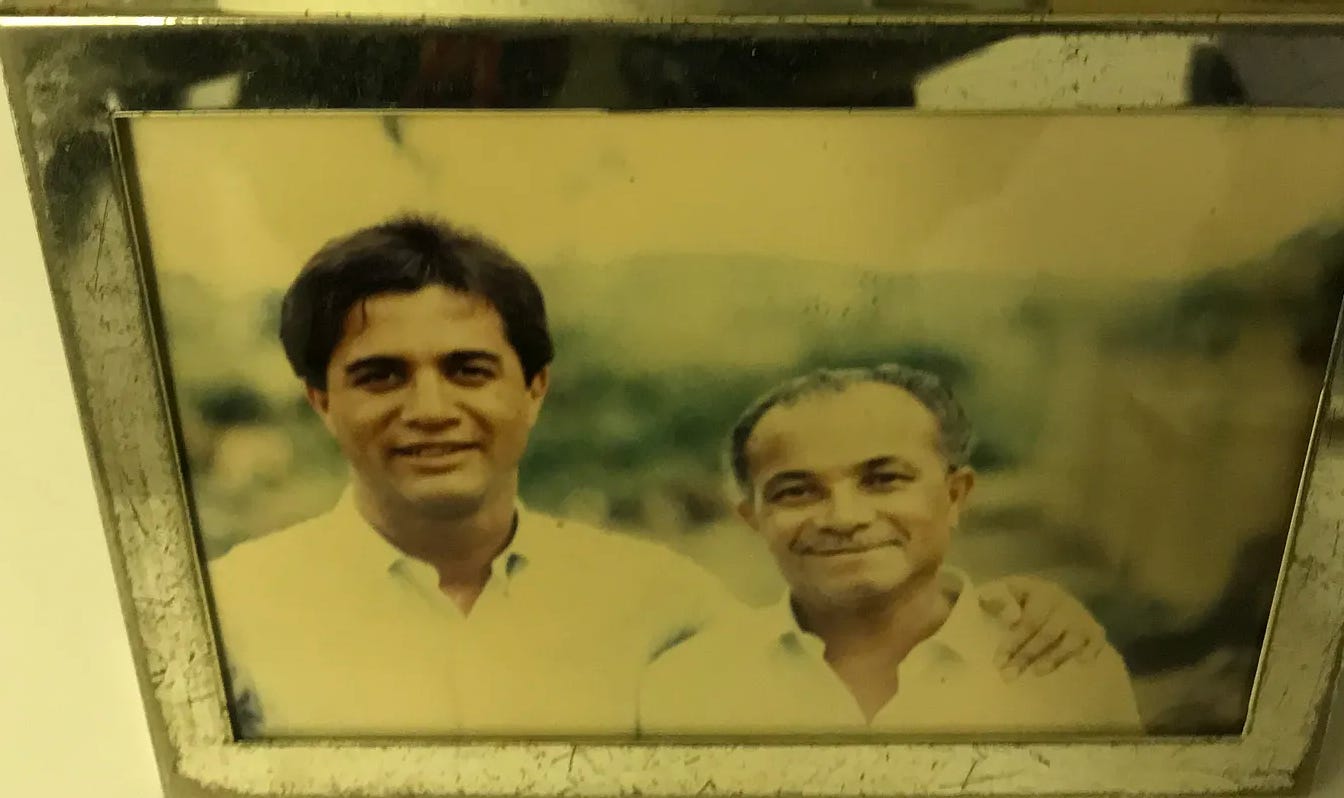
Arnie and his father, Fidel Segarra
Arnie’s love of basketball, and the skills he learned on the streets of Harlem, ultimately landed him a spot on the team at Benjamin Franklin high school and subsequently, a scholarship to Paul Smith College in the Adirondacks in Brighton, New York. He looks back and recognizes how this was his ticket to a different life, a life outside of the 10-block radius his whole world existed in until this point. He reflects, with felt gratitude, on all the luck and good fortune he's had in life. Though acknowledging luck is important, Arnie is also a prime example of someone who didn’t sit on the sidelines, but played every card he was dealt in life.
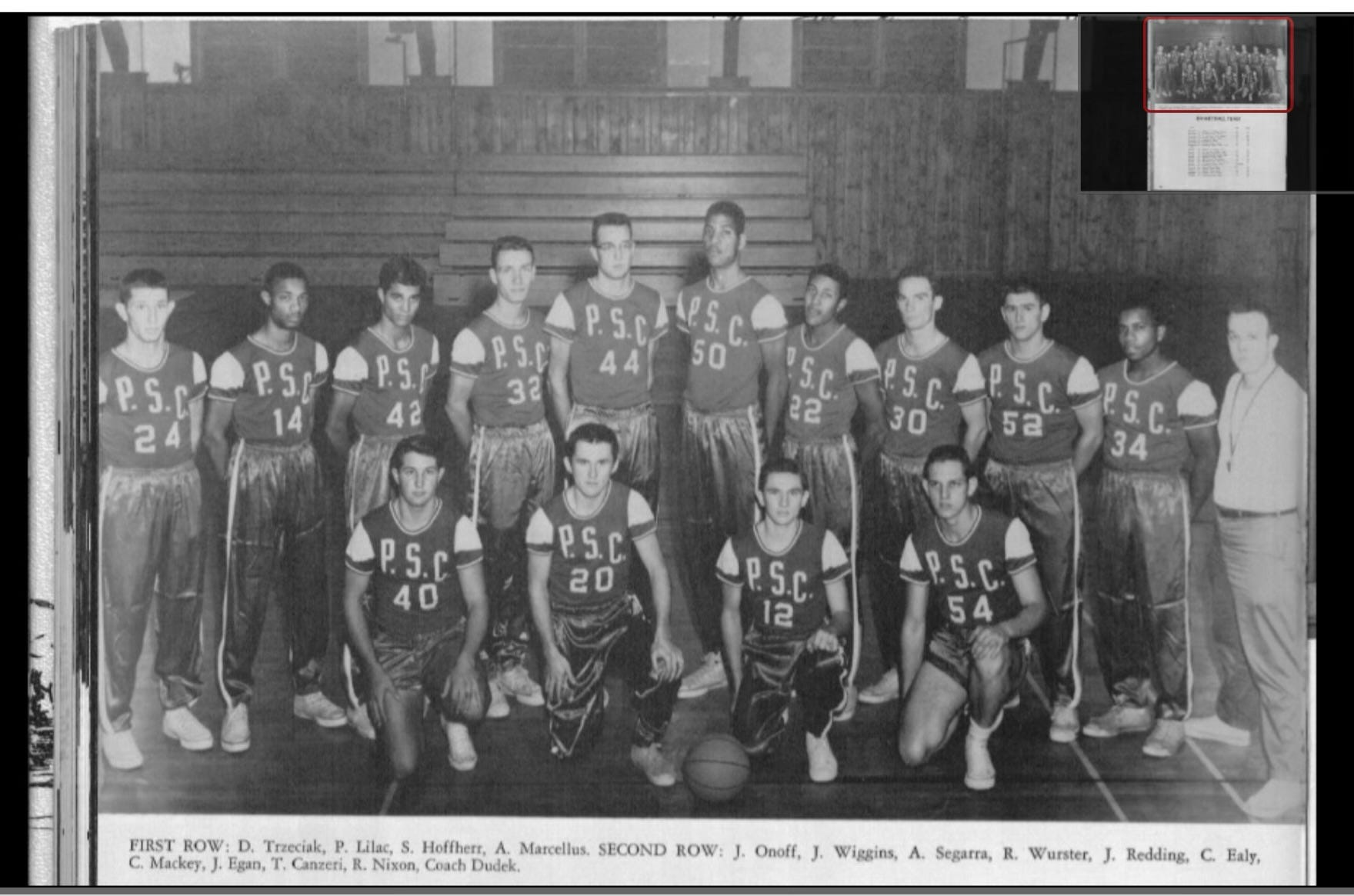
A. Segarra, number 42, played the position of guard at Paul Smith College.
Politics
Aide to Mayor John Linsday
Post college and back in Harlem, Arnie was working for the East Harlem Tenants Council coalition in his early 20s. New York City Mayor John Lindsay wanted to understand what was important to the community in Harlem and met with Arnie to discuss.
“I show up at Gracie Mansion wearing my torn jeans - which I hear are stylish now? - and [Mayor Lindsay] asked me to stay after the meeting. And the rest is history,” Arnie recalls. Mayor Lindsay brought Arnie onto his staff as the Special Assistant for Puerto Rican Affairs and his career in politics began. Arnie was “‘in charge of mediation and troubleshooting’… meaning that he used his street wisdom to help keep troublesome situations in East Harlem from boiling up into violence.” (Source).
But Arnie didn’t let politics tarnish his loyalty to his community. “Mr. Segarra lost the job with the Mayor after siding with members and sympathizers of the Young Lords, a cadre of Puerto Rican activists, when they occupied a church in an attempt to force it to provide space for a free breakfast program [for the community].”
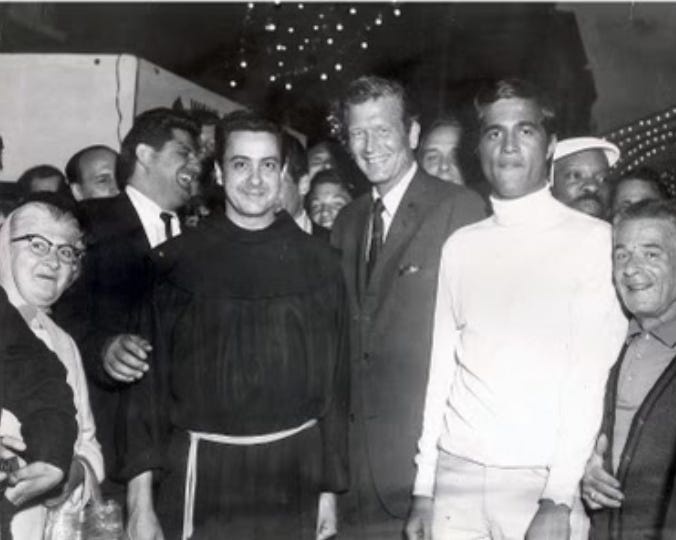
Mayor John Lindsay, center, with Arnie Segarra, right.
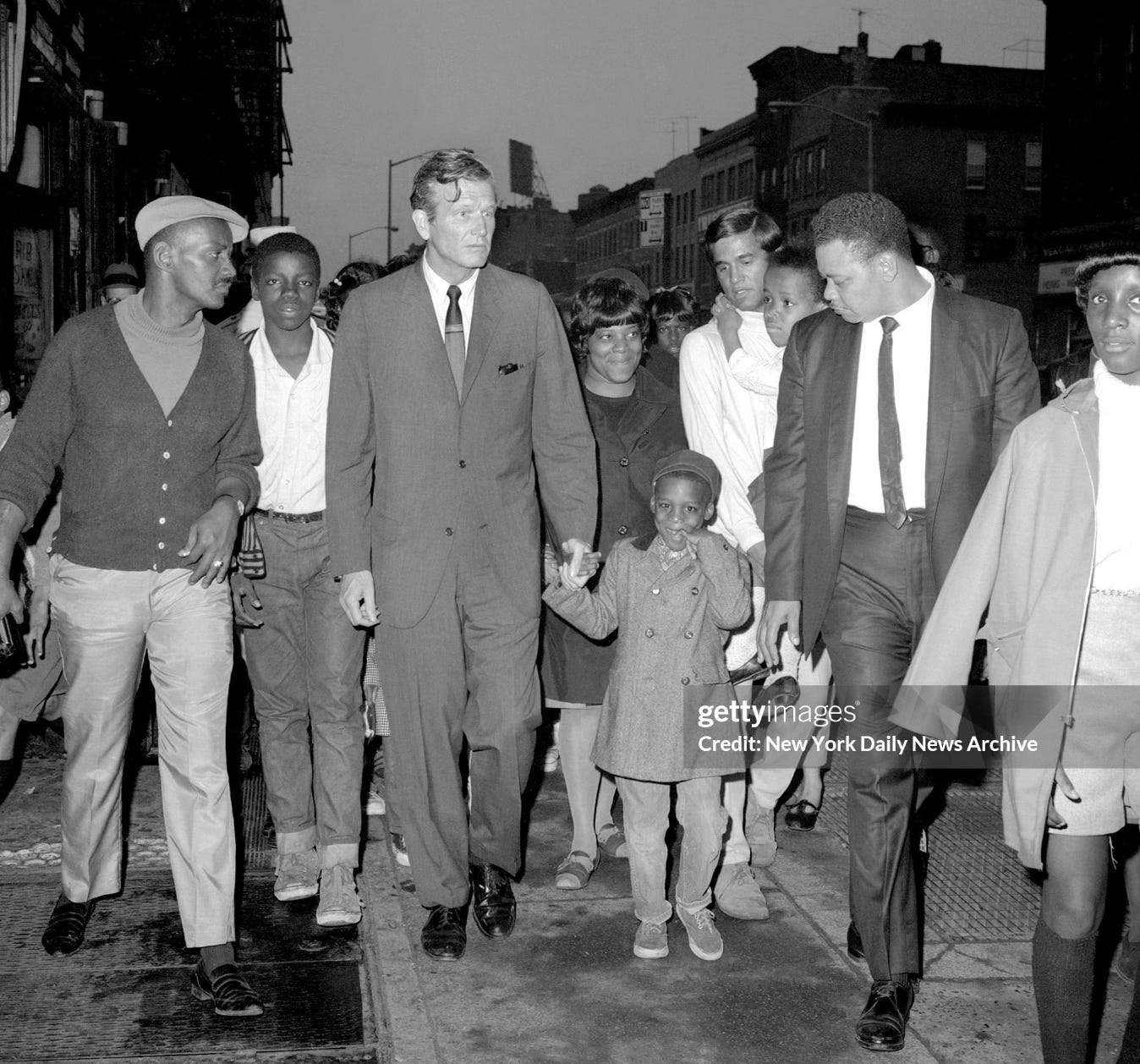
Mayor Lindsay, center, and Arnie
“Four-term congressman Lindsay catapulted into the limelight during the 1965 New York mayoral race, when his walking tours of Harlem and other black neighborhoods helped him capture 45 percent of the black vote and win the election- a remarkable achievement for a Republican from Manhattan’s Silk-Stocking district. His neighborhood forays later helped New York avoid the ugly race riots that afflicted so many American cities during the sixties.” Source
Working at Watergate in 1972
After his time with Mayor Lindsay, Arnie went down to Washington to help establish the office for Hispanic Affairs for the DNC. His office, of course, was in the Watergate building. And on June 17, 1972 there was a notorious burglary in the office.
Arnie recalls he got a call one day that summer back in NY (no caller ID back then he reminds me) -
“They said this is the FBI. I thought it was about the Black Panthers or the Young Lords, so I hung up. They called again. So I called my buddies up - told them to come downtown- and make sure you’re packing - I didn’t know who these guys were! Were they legit? And I met them at the Riveria Cafe. Turns out they were real FBI, right out of central casting with the thin black ties and sunglasses and everything. They wanted to talk about Watergate - at the time they suspected the Cubans could be involved and wanted to ask me what I knew about them [from my work with the DNC].”
Aide to Mayor David Dinkins, 1990-1993
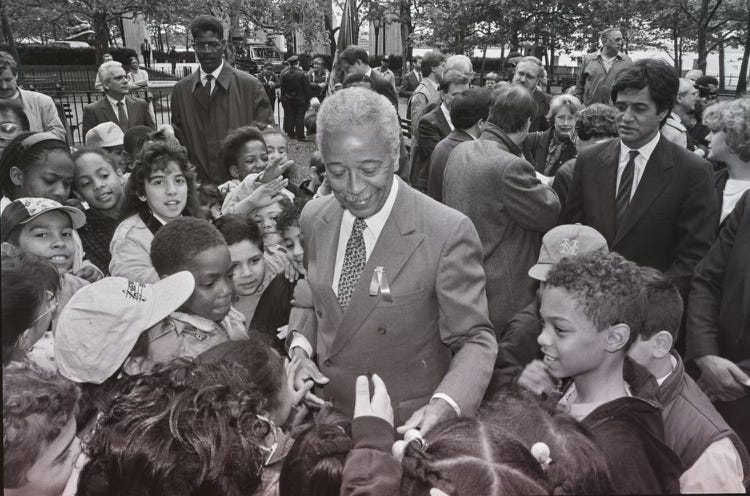
Mayor Dinkins and Arnie (pictured right) Photograph by Steve Mack / Alamy
During his time working with Mayor Lindsay, Arnie was introduced to four prominent New Yorkers in Harlem - Charlie Rangel, Percy Sutton, David Patterson and David Dinkins. All four men went on to make significant impact on the city as a civil rights attorney, NY congressman, and state governor, but it was Dinkins’ run for New York City Mayor in the late 1980’s that changed Arnie’s life yet again. Arnie was one of Dinkin’s first calls when he decided to run and he was instrumental in helping him land the seat. Dinkins was the first African American to be elected as Mayor of New York City on November 7, 1989. Arnie served as his personal aide during his tenure and was known as the man who “whispered in his ear.”
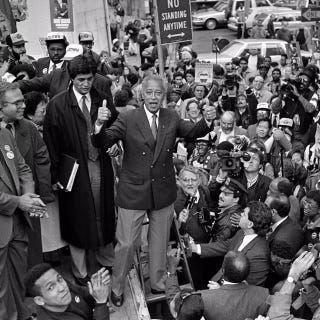
During his term, Arnie supported Dinkins in key efforts that revitalized the city. “David Dinkins simply set this city on a better path,” Mayor Bill de Blasio said. Source He lowered the crime rate and was considered a racial reconciler or “political Jackie Robinson” during a time of high racial tensions. Additionally, Dinkins brought the US Open to Queens and instigated the transformation of Times Square. Lastly, he served as a champion for the poor and underserved in the city, establishing after school programs and health care clinics across the boroughs.
And during it all Arnie was frequently seen a half step behind Dinkins, whispering in his ear, orchestrating behind the scenes.
“If there is a photo of the former New York City mayor David Dinkins campaigning, or walking up or down the City Hall steps, it is a good bet that Arnie Segarra is in the picture, usually close on Dinkins’s heels.” (The New Yorker, 2020) Source
Arnie still gets emotional reflecting on his time with Dinkins:
“He was truly a great man. I miss him very much.”
Friends & Familiar Faces
Living in Greenwich Village in the 70s and 80s meant that Arnie encountered many of the names you’ve heard about in magazines or history books - Nelson Mandela, Jessica Lange, Harry Belafonte, and Bob Dylan, to name just a few. He tells stories of nights out at Max’s Kansas City and Studio 54. And even worked at Chez Jose as a host at one point.
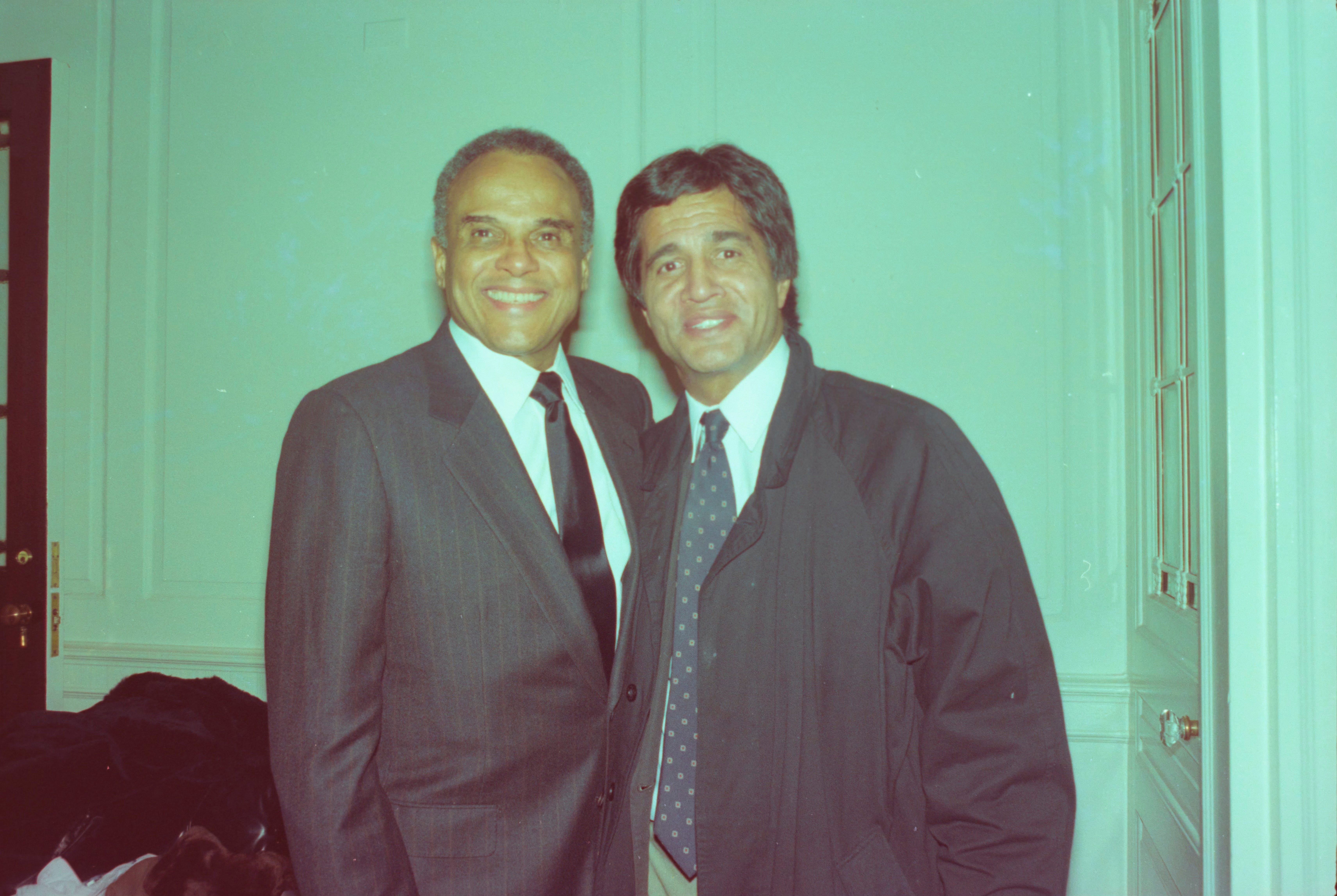
Arnie, right, pictured with friend and storied musician, Harry Belafonte.
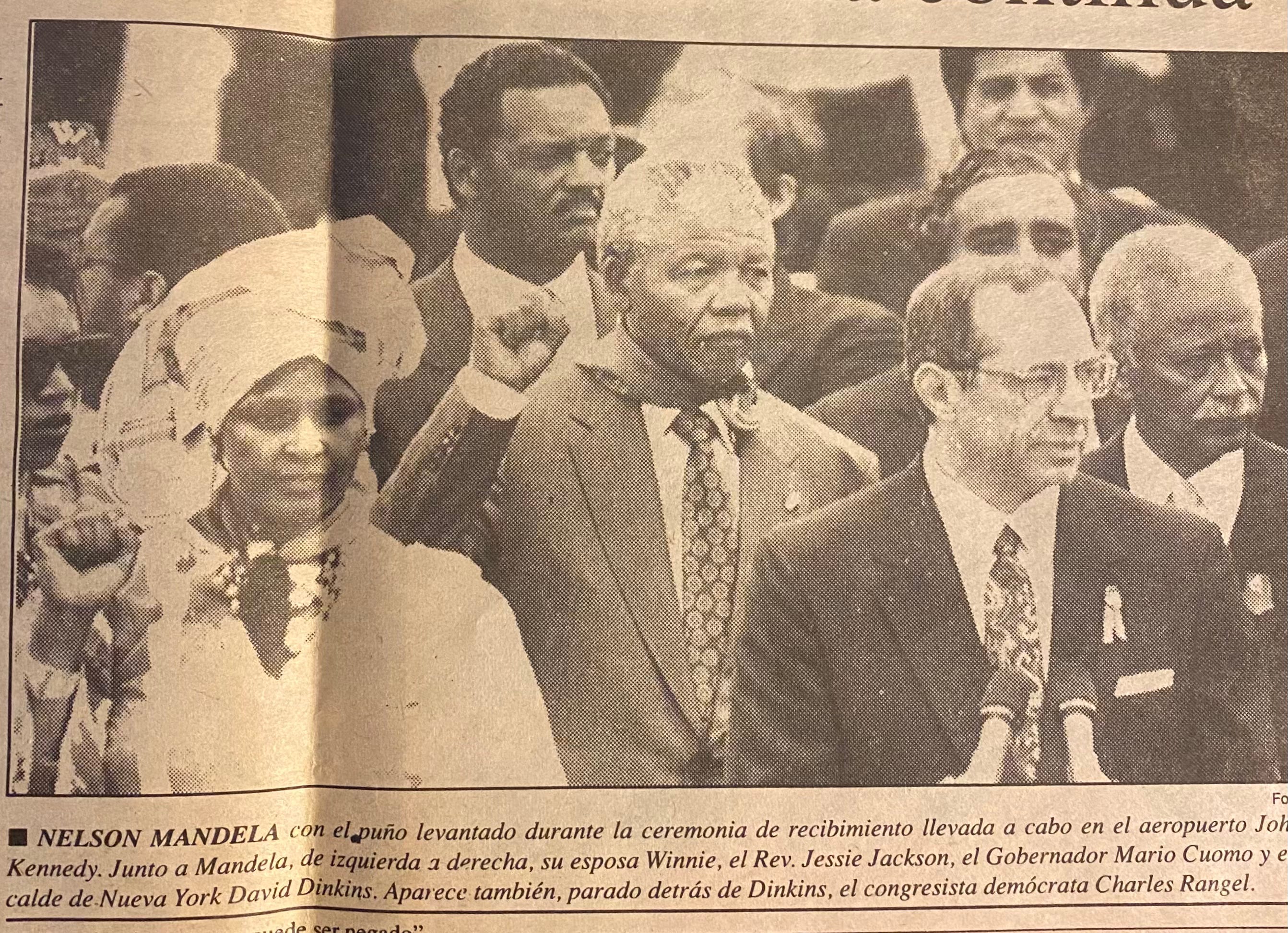
Pictured Nelson Mandela and Arnie, back right
On moving from Harlem to downtown in the 1960s:
“Why Greenwich Village? Oh man, it was the place to be! It still is the place to be.”
“I came to the village in 1967 and my neighbor and I would always say hello to each other. Turns out he was Jimi Hendrix. His studio was across the street from me on West 8th.”
The Stonewall Riot and Lion’s Head Regulars
His first apartment was at 18 Christopher St where he paid $350 for a one bedroom. “It sounds cheap, but you gotta remember the salaries were $8,000 back then!” Living there during the summer of ‘69, he recalls witnessing the Stonewall Riot right across the street. He would hang out at the Lion’s Head - a neighborhood bar at 59 Christopher (Kettle of Fish, present day) that was an institution in the village. “It was a big hangout for writers, Jack Keourac and the like. Politicians and activists of many decades. And I met a waitress there who was an aspiring actress, told me about a movie she auditioned for. Turns out it was the remake of King Kong and the waitress was Jessica Lange. She still lives nearby you know, I just ran into her over on 6th!” he exclaimed.
Greenwich Village + Joes Coffee Shop
Arnie's life story is woven through the streets of New York. For the last 16 years he has lived with his wife Aedin Moloney - a native of Ireland and long-time village resident.
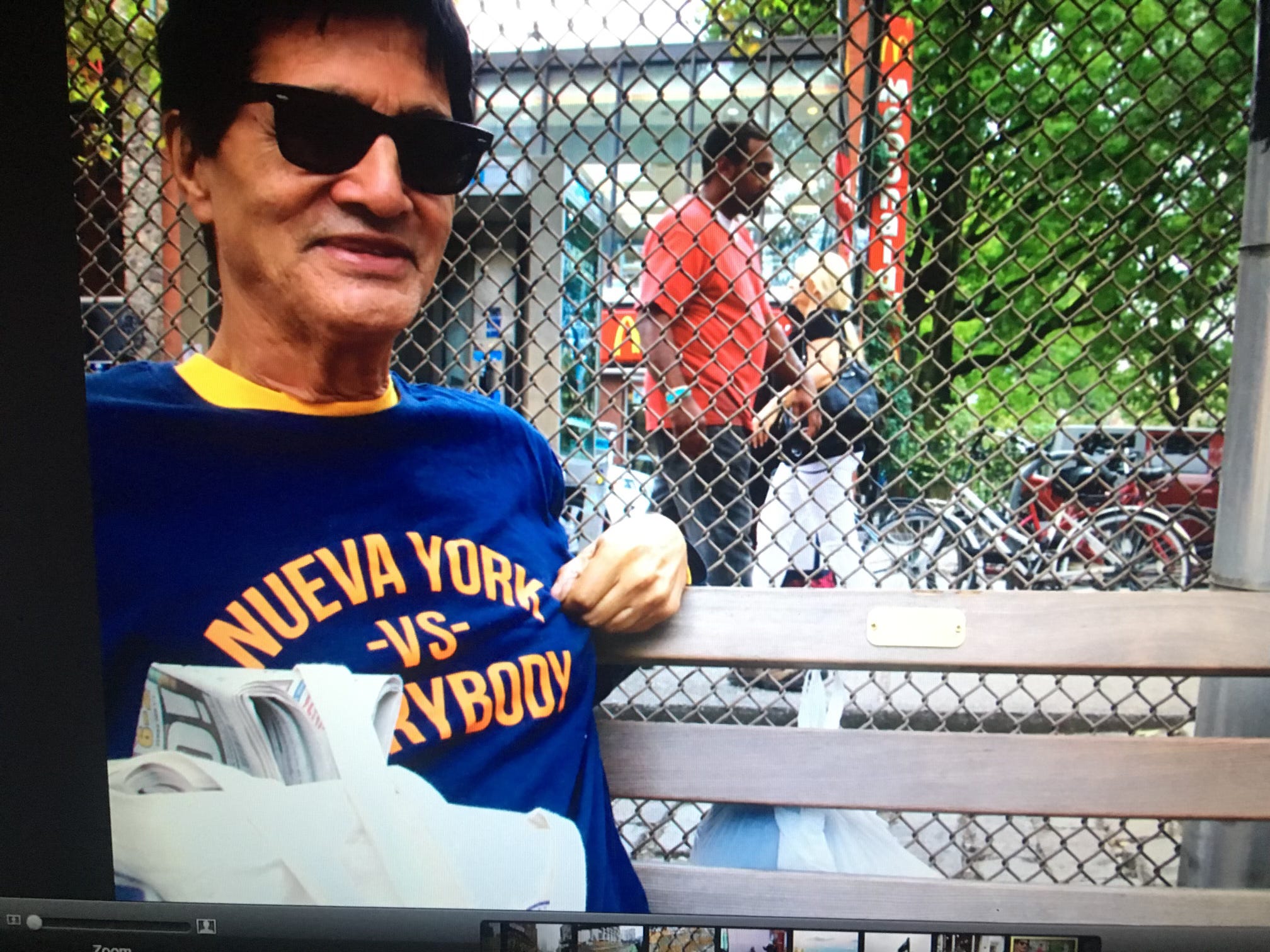
You can find the ‘mayor of Greenwich Village’ - as some fondly call him - most mornings sitting on the benches outside Joe's Coffee on Waverly, greeting the many neighbors and familiar faces walking by and holding court with the eclectic group of regulars that he lovingly refers to as his "focus group." It feels like a snapshot of New York's ethos - all ages, background, walks of life congregating outside the coffeeshop, greeting each other by name, discussing current events in the world and the neighborhood. Arnie sits at the center of that group on most mornings from April through November. Dressed in bright colors, he looks like he’s just stepped off the beach - which is where he does spend the remainder of the year - and has a signature style. Black ray bans, Adidas track suits, vintage t-shirts with storied New York logos, brands like Ralph Lauren, and a sneaker collection that the youth would consider "on trend."
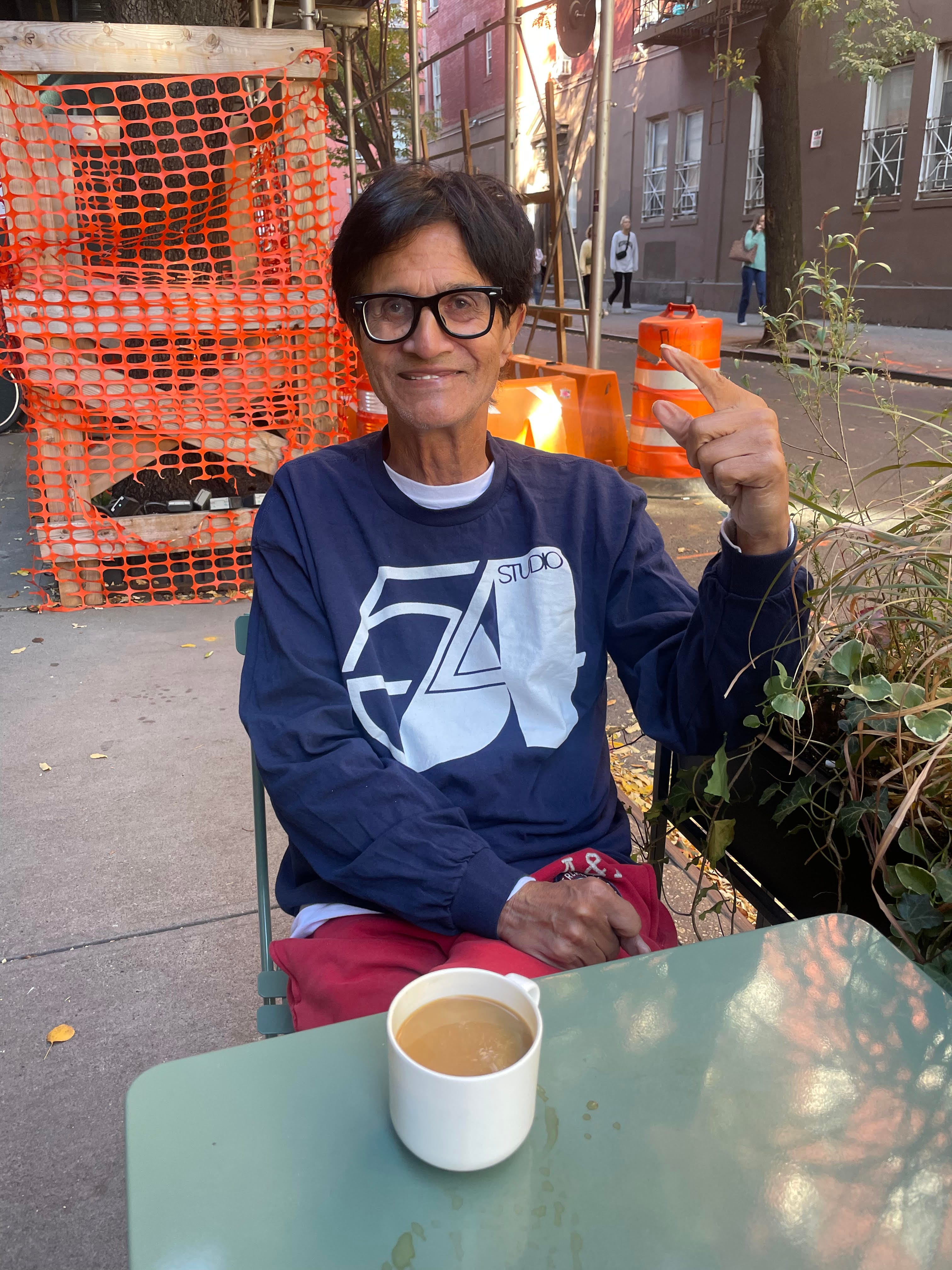
Arnie, sitting outside Radiant Coffee Shop in the West Village.
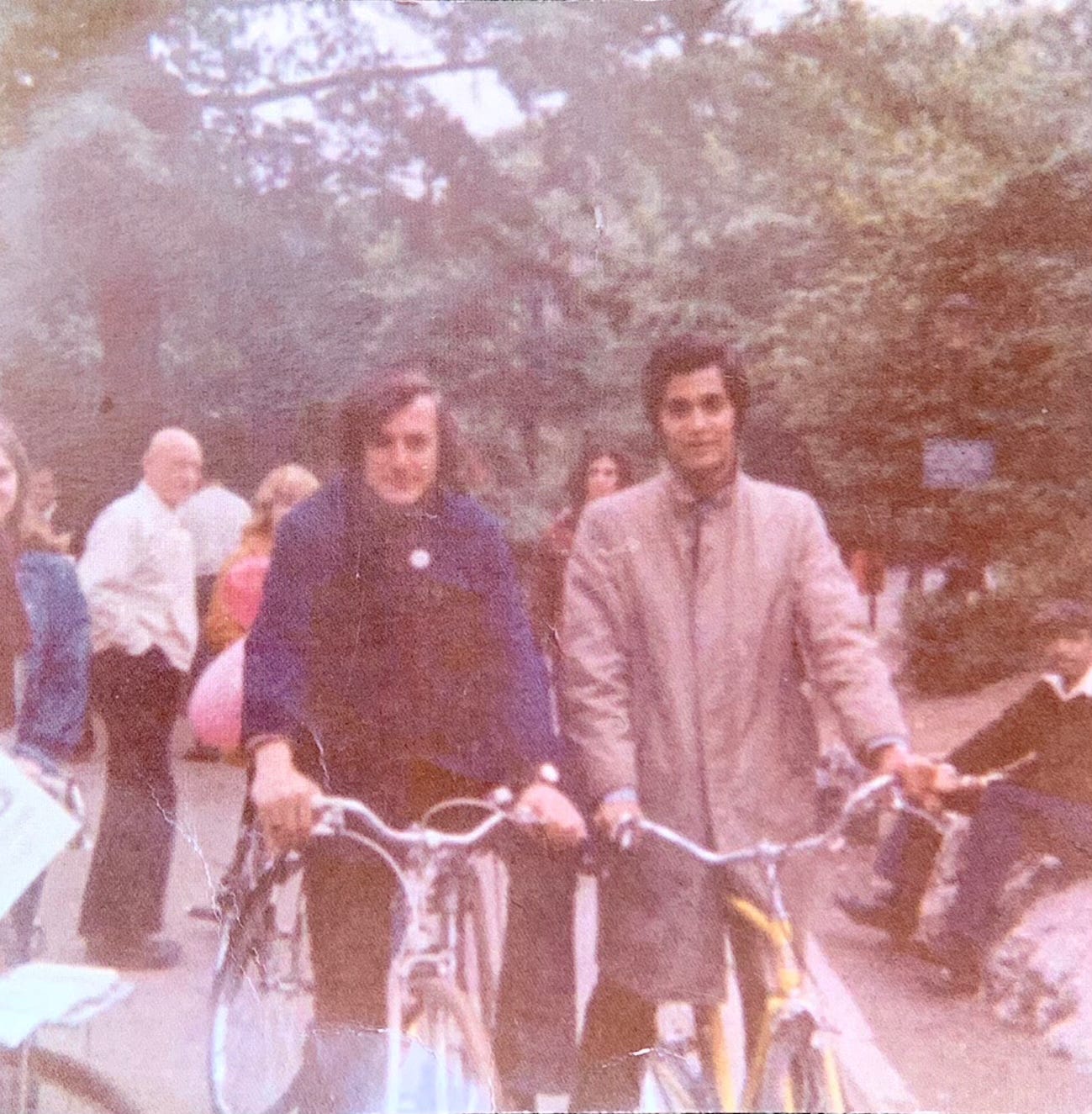
Greenwich Village, 1970s, Gus Theodoro, left, owner of Gus’ Place, Greek Restaurant at 149 Waverly Place with Arnie, right.
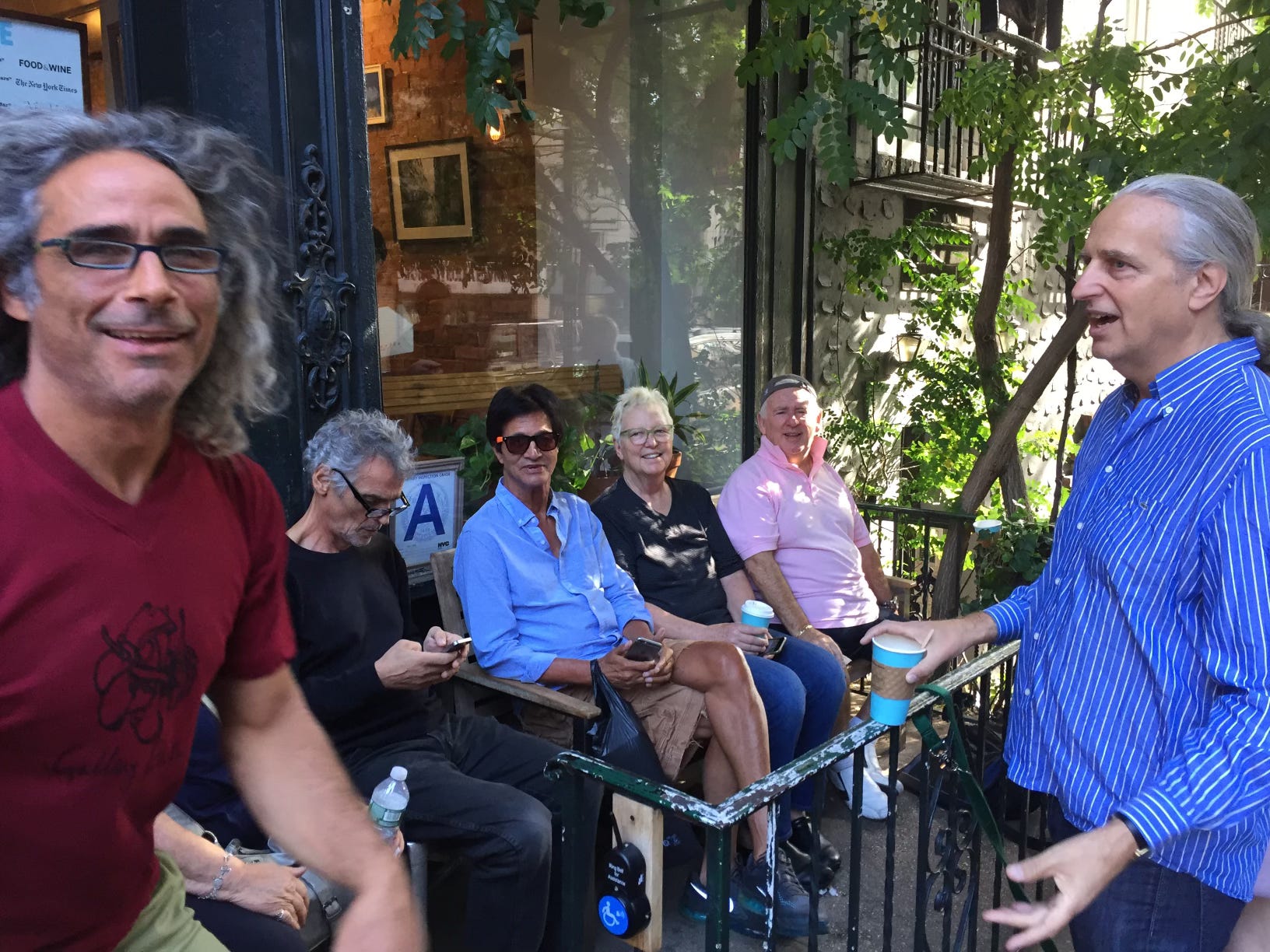
Arnie, convening with his ‘focus group’ of regulars at Joe’s coffee shop on Waverly Place.
In the coffeeshop, Arnie shuffles in and orders his typical cup of coffee with a blueberry muffin. He’s greeted warmly by various customers and turns heads. “Who’s that?” someone murmurs. The young barista working whispers to a customer, ‘That guy? He's a legend.’
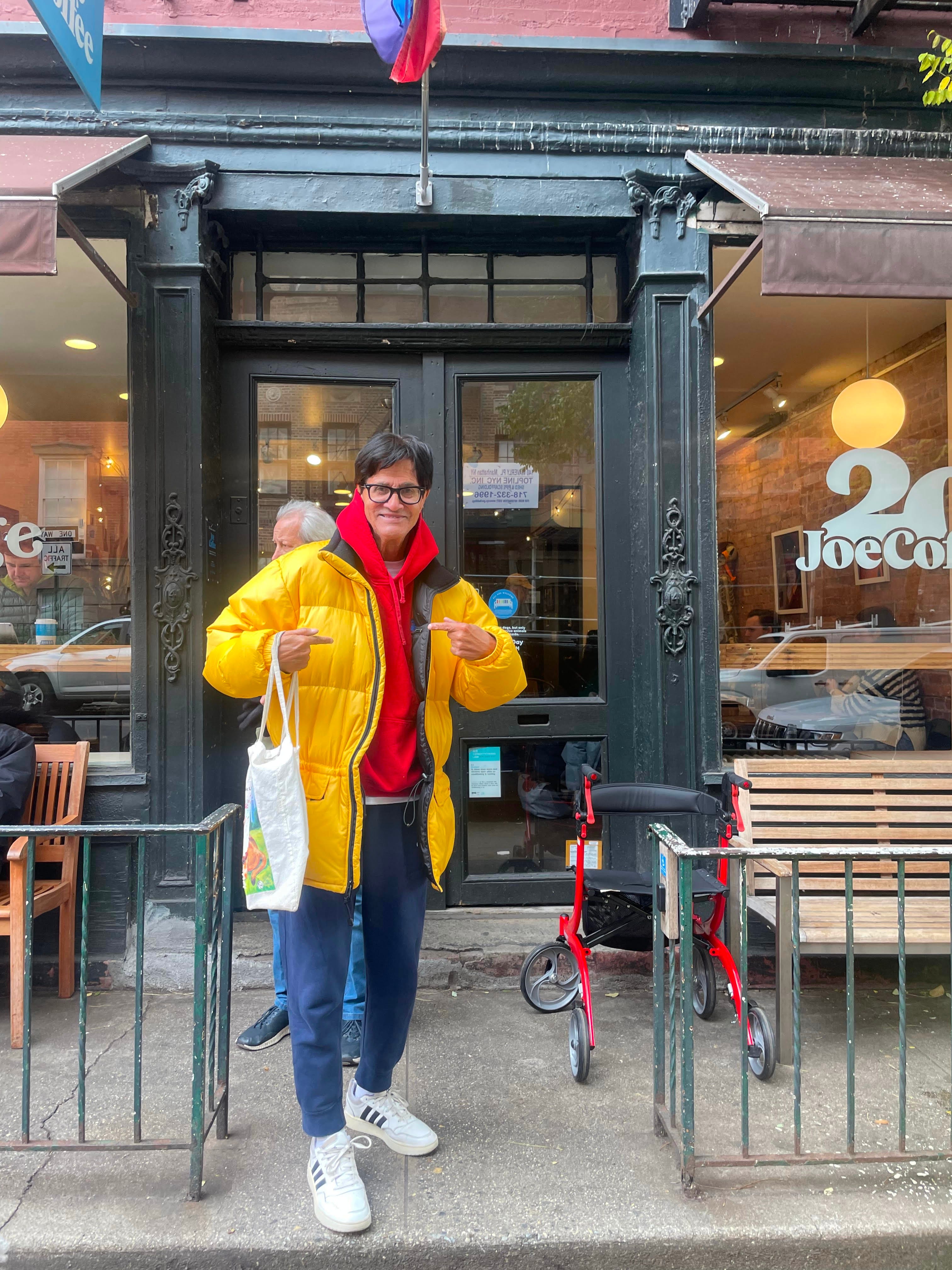
Your Friends,

I so enjoyed meeting Arnie, and your story highlighting his life, so far, was fantastic!
Arnie for president!